 EN
EN
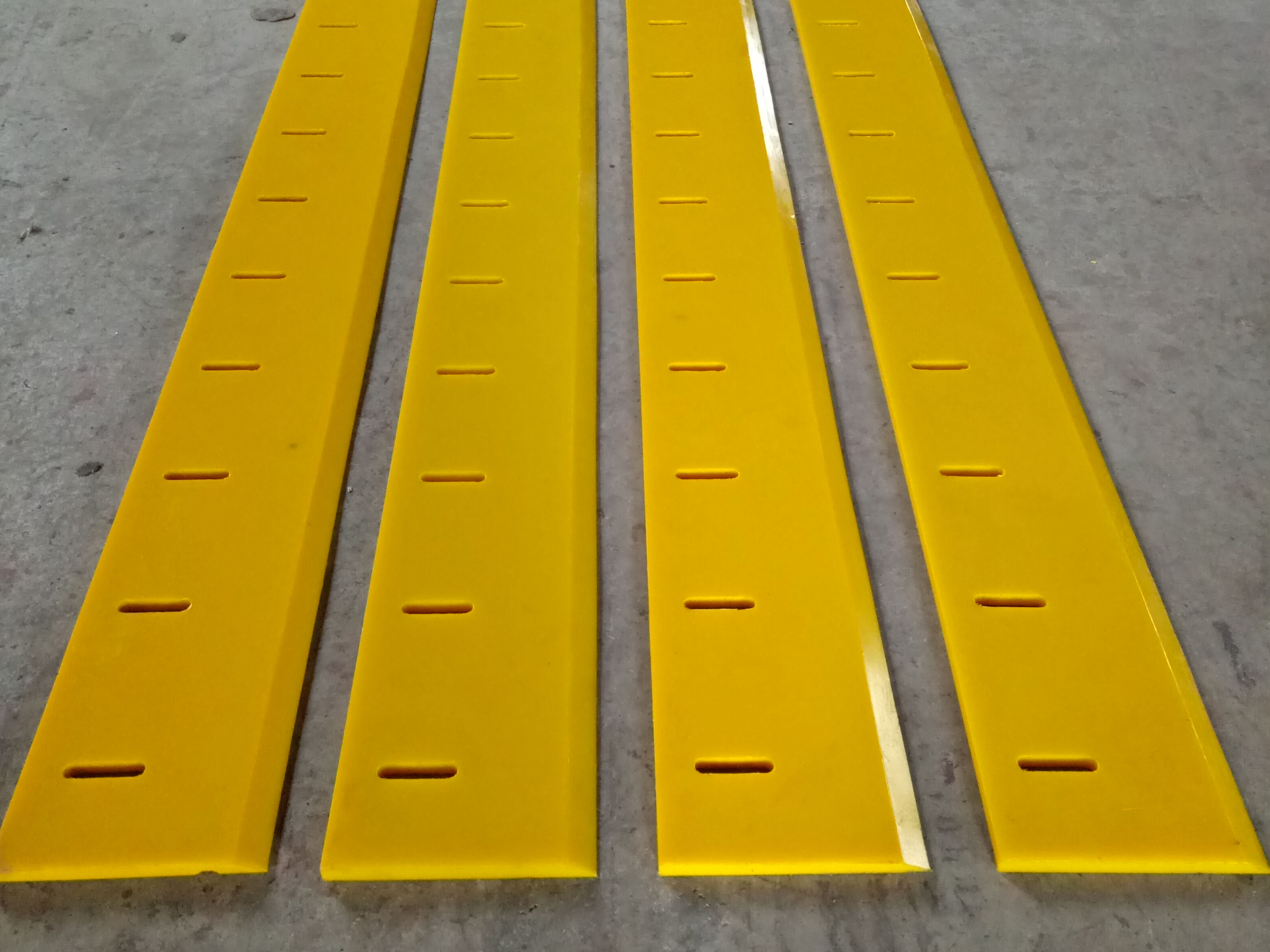
Why Antistatic PU Scraper Blades Are Critical for Explosive Dust Environments
Combustible dust in coal and grain handling creates catastrophic risks—a single static spark can ignite suspended particles, triggering explosions with devastating consequences. OSHA reports that dust clouds become explosive when airborne, with incidents causing over $740k in average damages (Ponemon 2023). Traditional metal blades generate dangerous triboelectric charges through friction, while standard polymers accumulate hazardous static. Antistatic polyurethane scraper blades prevent charge buildup by maintaining stable 10⁹ Ω resistivity, safely dissipating energy before reaching ignition thresholds. This makes them indispensable for ATEX (Appareils destinés à être utilisés en ATmosphères EXplosibles)/IECEx Zone 21 compliance, where equipment must eliminate ignition sources.
| Risk Factor | Standard Blades | Antistatic PU Blades |
|---|---|---|
| Static Accumulation | High (10¹²–10¹⁵ Ω) | Controlled (10⁹ Ω) |
| Ignition Probability | Elevated | Near-zero |
| Compliance | Non-compliant in explosive zones | ATEX/IECEx/MSHA certified |
In grain silos and coal conveyors—where fine particulate concentrations exceed 30 g/m³—these blades mitigate fire risks while maintaining cleaning efficiency. Their conductive formulation prevents resistive drift in humidity above 60% RH, a critical failure point in conventional alternatives. By integrating spark-free static dissipation directly into material handling systems, facilities avoid costly downtime while meeting stringent safety mandates for explosive dust environments.
Conductive PU Formulation: Achieving Stable 10⁹ Ω Resistivity for Spark-Free Static Dissipation
Carbon Black, CNTs, and Graphene: Balancing Conductivity, Dispersion, and Abrasion Resistance
Achieving optimal conductivity in antistatic polyurethane scraper blades requires precise integration of fillers like carbon black, carbon nanotubes (CNTs), and graphene. Carbon black remains cost-effective for bulk conductivity but risks agglomeration, causing uneven static dissipation. CNTs offer superior percolation networks at lower loadings (typically 2–4% by weight), maintaining PU flexibility while reliably achieving the critical 10⁹ Ω surface resistivity threshold. Graphene enhances abrasion resistance but demands advanced dispersion techniques to prevent sheet stacking. The Martindale abrasion test reveals mass losses below 3% in optimally blended formulations—critical for coal handling where blade wear exposes fresh material. Overloading conductive fillers beyond 15% volume compromises tensile strength by 40%, necessitating rheology-controlled mixing for homogeneous particle distribution without sacrificing mechanical integrity.
Curing Control and Interfacial Bonding to Prevent Resistivity Drift in Humid Silos
Humidity-induced resistivity drift poses severe risks in grain silos, where moisture absorption can degrade conductivity by 2–3 orders of magnitude. Advanced polyurethane formulations combat this through two-phase curing: initial low-temperature cross-linking establishes polymer networks, followed by staged post-curing at 80–90°C to strengthen filler-matrix interfaces. This creates moisture-resistant pathways that maintain stable volume resistivity below 10¹⁰ Ω·cm even at 85% relative humidity. Silane coupling agents further anchor conductive fillers to PU chains, reducing delamination risks during flexural stress. Validated by IEC 61340-4-1 tribocharging tests, these blades exhibit surface charge dissipation below 0.1 kV/s—preventing incendiary sparks in ATEX Zone 21 environments. Proper interfacial bonding also cuts resistivity variance to under ±5% across operational temperature ranges (–20°C to 70°C).
Mechanical Integration: Optimizing Geometry, Durometer, and Mounting for Safety and Longevity
The mechanical design of antistatic polyurethane scraper blades directly influences both spark prevention and operational lifespan in explosive dust environments like coal silos. Geometry, material hardness, and mounting systems must work synergistically to minimize static generation while withstanding abrasive materials.
Beveled Edge Design (30° + Radius Relief) to Minimize Tribocharging and Localized Heating
A precisely engineered 30° bevel angle reduces friction-induced charge accumulation by limiting blade-to-material contact area—a key factor in grain handling, where particulate friction generates hazardous voltages. Combined with a radius relief (typically 0.5–1.5 mm), this design eliminates sharp edges that concentrate electrical fields and heat, reducing tribocharging risks by over 60% (Dust Safety Journal 2022). The curved transition prevents localized temperatures exceeding 150°C, a known ignition threshold for coal dust. Durometer selection (typically 80A–90A Shore) balances abrasion resistance with sufficient flexibility to maintain consistent blade-to-surface contact without excessive pressure. Vibration-dampened mounting systems complete the safety equation, preventing resonant frequencies that accelerate wear and static buildup.
This integrated approach ensures ATEX compliance while extending replacement intervals—addressing both safety and cost efficiency in explosive zone operations.
Certification & Validation: Beyond Surface Resistivity to ATEX/IECEx Zone 21 and MSHA Compliance
Why Volume Resistivity + Tribocharging Rate Testing (IEC 61340-4-1) Is Essential
Relying solely on surface resistivity testing creates dangerous gaps in safety validation for ATEX-compliant scraper blades. In humid coal or grain silos, surface moisture can produce false conductivity readings, masking underlying insulation risks that enable static accumulation. Volume resistivity testing measures charge dissipation through the material’s entire cross-section, exposing hidden weaknesses.
The IEC 61340-4-1 standard mandates combined volume resistivity and tribocharging rate evaluations. This simulates real-world blade-to-material friction scenarios, quantifying spark risks under operational stresses. Without this dual testing, blades may pass surface checks yet generate >3,000 mJ sparks during high-speed scraping—exceeding the 0.25 mJ ignition threshold for grain dust.
For Zone 21/22 certification (dust-explosive areas), ATEX and IECEx require validated IEC 61340-4-1 test reports alongside MSHA’s abrasion resistance standards. This ensures static-safe performance throughout the scraper’s lifecycle—not just at installation.
FAQ
Why are antistatic PU scraper blades important in explosive dust environments?
They prevent potential ignition from static sparks by safely dissipating energy, which is crucial in environments where dust poses a combustion risk.
How are conductive fillers like carbon black used in these blades?
Conductive fillers such as carbon black, CNTs, and graphene are integrated to achieve the necessary antistatic properties without compromising the blade's mechanical integrity.
What certifications do these blades need?
They require ATEX/IECEx/MSHA certifications, which assure compliance and safety in explosive dust environments.
Table of Contents
- Why Antistatic PU Scraper Blades Are Critical for Explosive Dust Environments
- Conductive PU Formulation: Achieving Stable 10⁹ Ω Resistivity for Spark-Free Static Dissipation
- Mechanical Integration: Optimizing Geometry, Durometer, and Mounting for Safety and Longevity
- Certification & Validation: Beyond Surface Resistivity to ATEX/IECEx Zone 21 and MSHA Compliance
- FAQ