 EN
Why Polyurethane Screens are Completely Transforming Dewatering Operations
If you run a mineral processing plant, an aggregate quarry, or a busy coal washing facility, you already know that hitting your final moisture targets is a constant battle. Getting excess water out of heavy, abrasive slurries is easily one of the toughest and most energy-sapping parts of the whole bulk handling process. For years, traditional metal wire mesh screens were the default choice, but they constantly struggle in wet, gritty environments due to rapid corrosion, annoying blinding, and premature structural fatigue. That is precisely why smart plant operators are making the switch to advanced polyurethane vibrating screen panels for high-performance dewatering. Drawing from years of hands-on site troubleshooting, wet-screening evaluations, and mechanical reviews, let us dive into the real technical advantages, operational efficiencies, and business payback that polyurethane screens bring to modern dewatering lines.
The Smart Material Science Behind Polyurethane in Wet Screening
Let us talk about the material science for a minute, because polyurethane operates on a completely different level compared to standard rubber or steel. When a dewatering screen is shaking at high frequencies to shed water off fine mineral particles, the screen deck takes a massive amount of hydraulic slamming and continuous abrasive sliding. High-grade polyurethane absorbs all that kinetic energy like a champ, without cracking or taking on permanent deformation. Polymer engineering benchmarks point out that polyurethane has a natural self-cleaning trick up its sleeve thanks to its inherent flexibility. As the screen panels flex under vibration, near-size particles that usually wedge into metal mesh and cause blinding get instantly popped out. That means your open area stays wide and clear, giving you steady, reliable dewatering throughput shift after shift.
Getting the Slot Geometry Right for Better Capillary Drainage
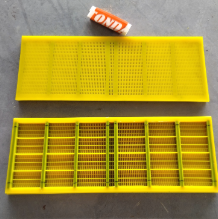
Dewatering is not just about shaking water off a pile of rocks; it is a masterclass in precise aperture design and fluid dynamics. Polyurethane vibrating screen panels built for dewatering usually feature clever slot designs, like tapered or profile-relief openings. These micro-slopes widen out as they go downward, allowing separated water and fine slurry to rush through instantly while stopping capillary suction and blinding dead in its tracks. Mineral processing experts always emphasize that holding a precise slot width—down to tiny fractions of a millimeter—is crucial if you want to pull out maximum moisture without washing away your valuable fine minerals. Advanced molding tech lets manufacturers hit razor-sharp aperture tolerances that blow traditional stamped metal plates out of the water.
Lessons Learned from Real-World Coal Slurry Troubleshooting
To see how all this theory holds up in the trenches, think about a recent optimization project at a high-capacity coal washing plant. The team was fighting a losing battle against excess moisture in their fine coal product, which was triggering heavy financial penalties from buyers and making downstream handling a total nightmare. On top of that, their old woven wire screens were getting chewed up by abrasive slurry every few weeks, leading to constant, expensive production stoppages. By retrofitting their vibrating dewatering screens with modular polyurethane screen panels featuring optimized relief-angle slots, the plant completely turned things around. Product moisture dropped way below the target line, and the wear life of the screen decks multiplied dramatically, cutting maintenance downtime and spare parts bills down to a fraction.
Protecting Your Equipment and Lowering Total Operational Costs
When plant managers look at yearly maintenance budgets, it is easy to focus strictly on the upfront price tag of replacement parts, but true savings come from shrinking your total cost of ownership. Polyurethane vibrating screens slash downtime because their crazy-good wear resistance means you are swapping out decks far less often over the course of a year. Plus, polyurethane is way lighter than steel, which takes a huge dynamic load off the vibrating screen machine itself. Less weight means less stress on your bearings, suspension springs, and drive motors, keeping catastrophic mechanical failures at bay and dropping power consumption. Pairing longer-lasting panels with less maintenance labor gives your plant a serious boost in capital efficiency.
Achieving Dewatering Excellence with Tonda
Getting the absolute best performance out of your wet-screening and dewatering setups takes a lot more than just grabbing generic replacement parts off a shelf—it demands tough product engineering, precision molding capabilities, and a manufacturing partner who genuinely gets the daily grind of mineral processing. Tonda has built a rock-solid global reputation for delivering top-tier polyurethane and rubber industrial solutions, including advanced polyurethane vibrating screen panels engineered for extreme wear resistance, spot-on aperture accuracy, and killer dewatering performance. Whether you are upgrading coal washing circuits, retrofitting aggregate dewatering plants, or searching for custom screening solutions, Tonda combines expert manufacturing skills with reliable supply chain backing. Partnering with Tonda helps you wipe out excess moisture, boost product quality, and future-proof your wet-processing operations for long-term success.
Table of Contents
- Why Polyurethane Screens are Completely Transforming Dewatering Operations
- The Smart Material Science Behind Polyurethane in Wet Screening
- Getting the Slot Geometry Right for Better Capillary Drainage
- Lessons Learned from Real-World Coal Slurry Troubleshooting
- Protecting Your Equipment and Lowering Total Operational Costs
- Achieving Dewatering Excellence with Tonda