
 EN
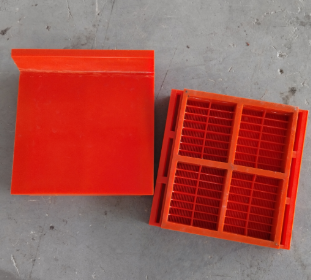
Exceptional Durability and Extended Service Life
Abrasion Resistance vs. Steel and Rubber Meshes
Polyurethane screen mesh delivers superior wear resistance in high-impact screening thanks to its elastomeric structure—which absorbs particle impact, resists cutting and gouging, and recovers shape after deformation. In contrast, steel decks suffer plastic deformation and aperture widening under repeated rock impact, while rubber panels frequently tear or lose tension when exposed to sharp, angular fines. Polyurethane formulations with Shore A hardness of 80–95 flex on impact and rebound reliably, minimizing permanent damage. Controlled wet-slurry abrasion tests (2023) showed polyurethane incurred 60–70% less mass loss than mild steel and 35–45% less than natural rubber—key evidence of its durability advantage. This preserves aperture accuracy longer, reduces blinding from deformed wires or sagging panels, and sustains consistent cut points across crushed stone, sand, and mineral circuits. In high-impact feed zones, 30–50 mm polyurethane panels with tapered relief angles maintain open area and extend replacement intervals. Modular designs further enable targeted replacement of only the most worn sections—avoiding full-deck change-outs, lowering labor demand, and reducing consumable waste and inventory costs.
| Material | Relative Wet-Slurry Mass Loss (2023) | Typical Failure Mode | Maintenance Impact |
|---|---|---|---|
| Mild steel wire | 100% baseline | Aperture widening, wire fatigue | Frequent replacement |
| Natural rubber | 55–65% of steel | Tearing, loss of tension | Moderate downtime |
| Polyurethane screen mesh | 30–40% of steel | Minor surface wear | Extended cycles |
Real-World Longevity: Field Data from Aggregate and Mining Operations
Field data from aggregate and mining operations consistently confirm polyurethane’s extended service life. A 2023 survey of 12 quarry and mine sites found secondary and tertiary screening decks using polyurethane lasted 10–14 months under 400–500 tonnes per hour—significantly longer than steel wire panels (replaced every 2–4 months) and heavy-duty rubber decks (6–9 months, often failing at bolt-down points). At the 1,000-hour mark, polyurethane retained over 85% of its original aperture accuracy, reducing off-spec product and recirculation loads. Its resistance to hydrolytic degradation and mineral buildup further extends life in wet processing circuits—especially when panels are rotated or flipped during scheduled maintenance. Gravel operations with high clay content also report fewer blinding events, enabling longer uninterrupted runs and reducing manual cleaning frequency. These outcomes translate directly into fewer change-outs, safer maintenance conditions, and more predictable production planning—supporting continuous shift targets and lowering consumable spending.
Enhanced Screening Efficiency and Throughput with Polyurethane Screen Mesh
Self-Cleaning Action and Blinding Reduction in Fine-Sizing Applications
In fine-sizing applications, near-size particles, moisture, clay, and sticky fines commonly blind conventional steel and rubber screens—reducing effective open area and throughput. Polyurethane combats blinding through elastic surface deformation, low surface energy, and tapered aperture geometry. Under vibration, each panel flexes slightly, dislodging trapped particles and preventing wet fines from sealing openings. This self-cleaning action maintains higher effective open area for longer than rigid metal media—particularly with damp or clay-heavy feeds. Independent trials (2023) documented throughput gains of 20% or more after switching to polyurethane in high-moisture fine-sizing circuits. Operators also report fewer manual cleaning stops and more stable separation cut points—improving product consistency and downstream process stability. By mitigating blinding before it becomes a bottleneck, polyurethane helps fine-screening lines sustain steady feed rates without frequent shutdowns for washing or deck replacement.
Case Study: 22% Throughput Increase Using 8-mm Polyurethane Screen Mesh in Coal Preparation
A coal preparation plant processing high-ash fines replaced traditional woven wire panels with 8-mm polyurethane screen mesh on a secondary wet sizing deck. Within the first month, throughput increased by 22% while maintaining specification-compliant near-size particle rejection. The polyurethane panels sustained effective aperture size longer because elastic flexing shed wet coal fines instead of trapping them. Screen cleaning downtime dropped from several shifts per week to one scheduled inspection per shift—enabling higher average feed rates. Plant engineers observed fewer torn or pegged openings compared with the previous metal screen, reducing unplanned maintenance and stabilizing product ash content. The 8-mm aperture proved especially effective for dewatering and fine coal classification without compromising separation sharpness.
Noise Suppression and Improved Operational Safety
Acoustic Dampening: Measured dB Reduction Versus Metal Alternatives
Polyurethane screen mesh significantly reduces impact noise at transfer points and under material flow—typically lowering sound levels by 6–10 dB(A) compared with steel mesh. This dampening stems from the material’s elastic surface, which absorbs impact energy rather than radiating it as metallic ringing. Since workers exposed to average noise levels of 88 dBA face a 129% greater risk of serious injury than those below 82 dBA (2025), this reduction supports critical safety outcomes: preserving alarm audibility, enabling clear verbal communication, and reducing hearing-loss claims. Acoustic performance is thus not merely a comfort benefit—it functions as an effective, passive engineering control aligned with occupational health and regulatory compliance goals.
Optimized Total Cost of Ownership for Mining and Recycling Facilities
TCO Analysis: Balancing Upfront Cost, Replacement Frequency, and Downtime Savings Over 3 Years
A three-year total cost of ownership (TCO) analysis reveals that polyurethane screen mesh—despite its higher initial purchase price—often delivers lower lifecycle costs than woven wire or perforated plate in abrasive mineral and recycling streams. Steel panels may require multiple annual replacements, whereas polyurethane systems frequently remain in service for many months, cutting labor hours, spare parts inventory, and scheduled change-out frequency. Crucially, each avoided replacement also reduces unplanned downtime—the largest hidden cost in most screening operations. Over 36 months, facilities routinely achieve a lower cost per ton screened by combining longer service intervals with reduced maintenance labor and minimized production losses. This makes the higher upfront investment financially justified—and operationally advantageous.
Frequently Asked Questions (FAQ)
What makes polyurethane screen mesh more durable than steel or rubber?
Polyurethane screen mesh has an elastomeric structure that absorbs impact and resists cuts and gouges, making it more durable than steel and rubber, which suffer from deformation, tearing, and other forms of wear.
How does polyurethane screen mesh improve screening efficiency?
Polyurethane mesh reduces blinding and clogging through its self-cleaning action, elastic surface deformation, and tapered aperture geometry, leading to improved screening efficiency and sustained open area.
What is the lifespan of polyurethane screen mesh in mining operations?
Field data from mining and aggregate operations shows polyurethane screens last 10–14 months in secondary and tertiary screening decks, significantly surpassing the typical lifespan of steel and rubber screens.
Does polyurethane screen mesh help reduce noise levels?
Yes, polyurethane screen mesh reduces noise levels by 6–10 dB compared to steel mesh, which helps improve worker safety and communication in noisy environments.
Is polyurethane screen mesh cost-effective in the long term?
Despite higher upfront costs, polyurethane screen mesh offers longer service life, reduced downtime, and lower replacement frequency, making it cost-effective over a three-year TCO analysis.
Table of Contents
- Exceptional Durability and Extended Service Life
- Enhanced Screening Efficiency and Throughput with Polyurethane Screen Mesh
- Noise Suppression and Improved Operational Safety
- Optimized Total Cost of Ownership for Mining and Recycling Facilities
-
Frequently Asked Questions (FAQ)
- What makes polyurethane screen mesh more durable than steel or rubber?
- How does polyurethane screen mesh improve screening efficiency?
- What is the lifespan of polyurethane screen mesh in mining operations?
- Does polyurethane screen mesh help reduce noise levels?
- Is polyurethane screen mesh cost-effective in the long term?