 EN
The Hidden Bottlenecks of Traditional Screening Media
When running busy aggregate processing plants, sand quarries, or heavy mineral separation facilities, managing the screening deck efficiently stands out as one of the most critical factors for long-term operational profitability. If the screening media wears down prematurely or suffers from persistent blinding, pegging, and material buildup, the entire plant slows to a frustrating crawl, dragging down daily production volume and driving up operating overhead. Spending time alongside seasoned plant engineers who troubleshoot material separation bottlenecks on a daily basis reveals a definitive, widespread shift across the heavy industrial sector: operations are rapidly moving away from traditional woven wire screens toward advanced, high-performance polyurethane screen mesh. Tonda has long championed these durable, engineered screening solutions to help industrial facilities keep pace with demanding heavy workloads while effectively cutting down on constant maintenance headaches.
Why Traditional Screening Media Falls Short
Traditional wire mesh screens have served as a baseline staple of the screening industry for decades, yet they carry heavy operational baggage that impacts bottom-line performance. In harsh, high-impact applications involving abrasive rock, sharp granite, wet ores, or fine aggregate sizing, traditional steel mesh wears down rapidly under constant friction, leading to frequent screen panel changeouts and costly, unscheduled production downtime. Worse yet, sticky, moisture-laden materials frequently cause severe blinding and pegging, choking the screen apertures and allowing oversized particles to slip unchecked into the final commercial product. Leading industrial processing studies consistently highlight how uncontrolled screen blinding reduces effective open area by alarming percentages, severely harming classification accuracy and product quality compliance. Overcoming these chronic, profit-draining challenges requires stepping up to advanced material solutions that resist abrasion naturally while keeping aperture geometry precise throughout extended operational lifespans.
The Advanced Science Behind Polyurethane Screening
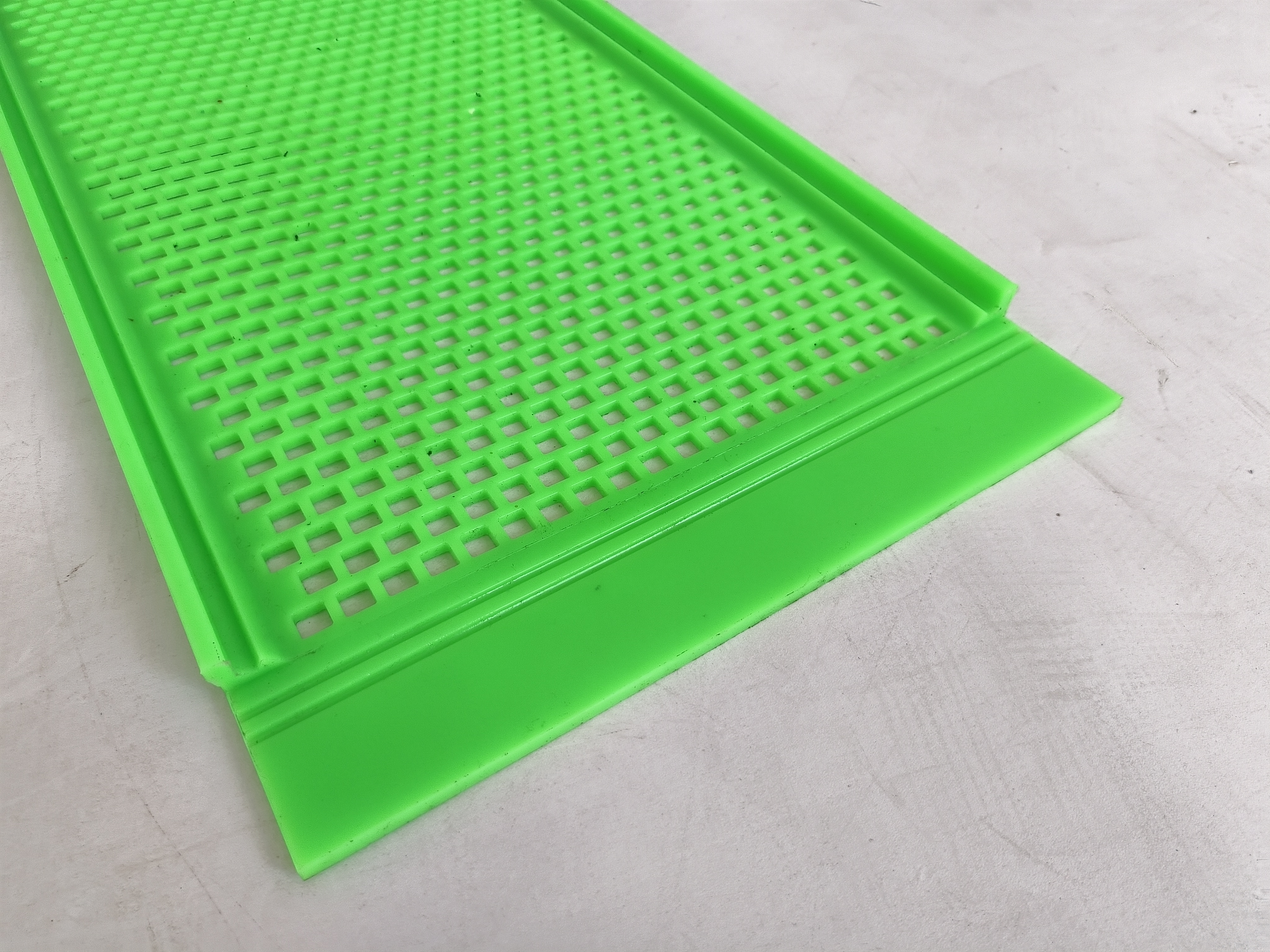
Polyurethane screen mesh fundamentally transforms the classification process by uniquely combining high-tensile elasticity with extreme resistance to abrasive wear. Unlike rigid steel media, premium polyurethane absorbs the immense impact energy of falling rocks, effectively bouncing stones away rather than allowing them to crush, cut, or wear down the active screen surface. This specialized elastic behavior also allows individual mesh apertures to flex dynamically under continuous screen vibration, successfully popping out trapped near-size particles and preventing blinding before it can disrupt the screening deck. Mineral processing experts and materials engineers frequently note that this inherent self-cleaning action keeps the open area consistently clear, ensuring sharp cut points and precise sizing separation even when processing damp, sticky, or challenging feed materials. Furthermore, polyurethane operates much quieter than steel, drastically reducing noise pollution across the entire plant floor.
Lessons Learned from Real-World Plant Upgrades
Examining actual industrial plant transformations demonstrates the dramatic operational difference that switching to polyurethane mesh delivers in day-to-day production. Consider a recent performance evaluation conducted at a high-capacity aggregate washing and sizing facility that was constantly battling chronic screen mesh failures, blinding issues, and hours of daily manual cleaning downtime. The plant management team decided to replace their traditional woven wire panels with custom-configured Tonda polyurethane screen mesh designed for severe duty cycles. A thorough operational check after several months of rigorous, around-the-clock plant operation revealed an astonishing drop in unscheduled stoppages. Not only did the component wear life stretch out exponentially compared to standard steel alternatives, but final product gradation consistency improved drastically because aperture deformation was completely eliminated. Plant crews happily traded endless hammering, clearing, and maintenance delays for smooth, predictable, and highly efficient shifts.
Weighing the Long-Term Economic Value
Deciding whether to upgrade industrial plant screening media always comes down to the core financial bottom line: carefully balancing upfront component expenses against long-term operational savings. While premium polyurethane panels might carry a slightly higher initial investment cost than basic steel wire mesh, their operational service life routinely outlasts steel by a factor of several times over. This incredible longevity translates directly into fewer replacement parts to purchase, lower shipping overhead, and a dramatic drop in labor hours spent inside dangerous screen decks. From a broader strategic business perspective, boosting active plant uptime and improving product gradation specs delivers a fast, measurable return on investment across demanding industrial operations.
Manufacturing Excellence and Reliable Global Supply
Delivering top-tier industrial screening performance requires much more than just a solid design; it demands advanced polymer formulation expertise, precision casting molds, and a bulletproof supply chain network. Tonda leverages state-of-the-art manufacturing facilities, specialized polymer chemistry, and rigorous quality control protocols to engineer wear-resistant polyurethane screen mesh built to thrive in the harshest global mining and aggregate environments. By combining precise engineering capabilities with flexible production power, Tonda ensures that quarry operators, mining corporations, and industrial plants receive dependable product availability, expert technical guidance, and reliable operational support whenever and wherever they need it.