
 EN
EN
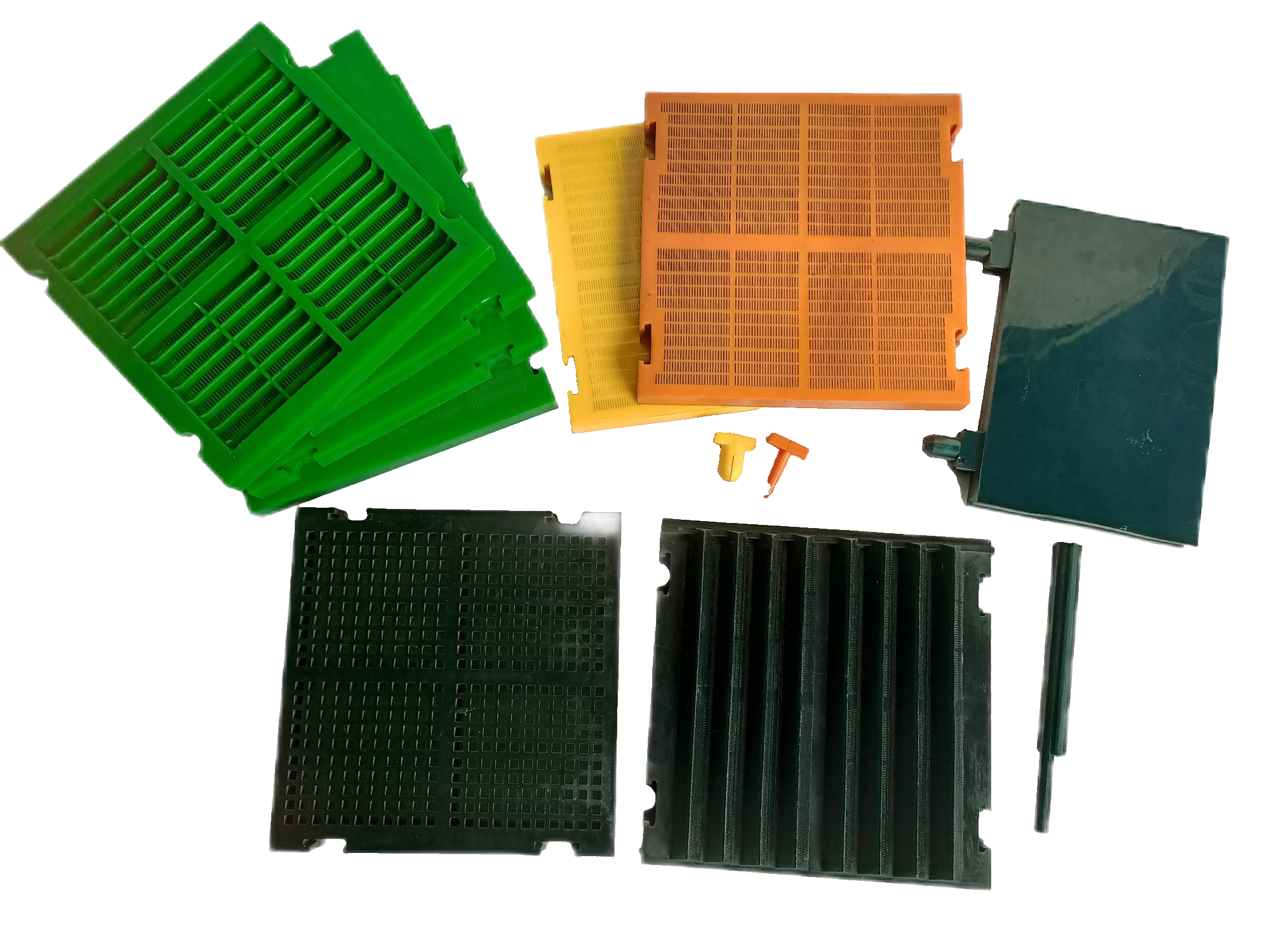
Why Polyurethane Screen Clogging Occurs: Blinding and Pegging in Wet/Sticky Applications
Polyurethane screen clogging occurs primarily through two distinct mechanisms—blinding and pegging—both intensified in high-moisture or adhesive applications.
Screen blinding occurs when small wet particles like moist clay or powdered minerals stick to screening surfaces and eventually form a solid crust that blocks the holes. The combination of water's pulling force and the sticky nature of these materials can cut down the usable screen area by nearly half in really wet conditions. When moisture gets involved, what were once loose particles turn into glue-like clusters that grab onto polyurethane screens with surprising strength. These stubborn deposits keep growing even when the screen is vibrating, making them particularly frustrating for operators dealing with wet feedstocks in processing plants.
When particles get stuck mechanically in screening operations, we call this pegging or plugging. Basically, what happens is that particles that are almost the right size or shaped oddly end up wedged into screen holes because of how they look. We see this problem a lot when dealing with crushed materials that have flat or long, thin pieces. These fragments can fit into spaces that are just a bit bigger than themselves and then get jammed. Blinding works differently though. With pegging there's no sticking involved, just the physical locking of particles in place. Both issues really hurt screen performance. Blinding makes the screening process less effective overall, while pegging actually reduces the available space between screen openings, cutting down on throughput. For anyone working with polyurethane screens in tough conditions where materials are wet or sticky, these problems show exactly why special anti-clogging solutions need to be part of the equipment setup from day one.
Core Anti-Clogging Mechanisms Enabled by Polyurethane Screen Surface Treatment
Surface Energy Modulation: Hydrophobicity and Reduced Adhesion to Moist Clay
When we apply surface treatments to polyurethane materials, they change the chemical makeup so the surface becomes much less wettable. This makes the material highly water repelling. Screens that have been treated this way soak up around 70 percent less moisture compared to regular ones. What this means practically is that there's a kind of slick layer formed on the screen surface which stops moist clay particles and fine dust from sticking to the openings. Looking closer at what happens between molecules, these special treatments actually weaken those tiny attractive forces called Van der Waals interactions. As a result, when the screens vibrate during operation, particles tend to fall away instead of building up over time. Real world tests conducted in mines dealing with lots of clay content consistently show that treated screens maintain about 92% efficiency rate while standard polyurethane screens only manage around 68%. These numbers clearly demonstrate how specific chemical modifications to screen surfaces can effectively tackle common problems like blinding and pegging that plague many screening operations.
Microtopography & Edge Sealing: How Controlled Roughness and Coated Boundaries Prevent Particle Entrapment
The surface roughness created by precision microtopography (usually between 5 to 20 microns in peak height) actually reduces how much particles come into contact with the screen surface. Think of those tiny peaks as little roadblocks that stop fine materials from settling down at the edges of the pores. When it comes to preventing blockages, another important factor is edge sealing. Special treatments create smooth polymer borders around every opening, which gets rid of those tiny gaps where problems start happening. Real world tests have shown that when screens combine both these approaches, they cut down on trapped particles by nearly 60%. For operators dealing with sticky substances, this means particles bounce off the screen rather than getting stuck there during normal operations.
The Role of Viscoelastic Flexing in Self-Cleaning Polyurethane Screen Performance
Dynamic Relaxation Under Vibration: How Elastic Recovery Dislodges Sticky Particles
The natural viscoelastic properties of polyurethane allow it to clean itself passively when subjected to vibrations. During operation, as the screen bends from dynamic loads, the polymer chains within actually stretch and absorb mechanical energy. Once the pressure lets up, the material quickly snaps back into place, creating small forces strong enough to loosen particles stuck on the surface. This works particularly well with wet, sticky substances such as clay mixtures that tend to cling due to their high cohesion. Laboratory tests have shown that screens made from treated polyurethane can eject particles at rates around 40% better than standard rigid options when exposed to similar vibrations. What makes this really valuable for manufacturers is that polyurethane doesn't wear out easily over time. Even after many thousands of compression cycles, the self cleaning effect stays pretty much the same, which means fewer unexpected stoppages and no need for constant manual cleaning to keep those apertures working properly.
Optimizing Polyurethane Screen Designs with Application-Specific Surface Treatments
Standard surface treatments just don't cut it when dealing with tough conditions like wet ores, thick mineral mixtures, or sticky clay materials where things like stickiness, sliding forces, and wear patterns change all over the place. Custom surface engineering tackles these problems head on by making precise changes at both chemical and physical levels. The goal is to get the right balance between water repelling properties, maintaining sharp edges, and responding properly to actual material flows encountered in operations. When done right, this approach makes equipment last much longer and keeps openings clean and functional for extended periods compared to generic commercial coatings that simply cannot handle such demanding environments.
Geometry-Driven Treatments: Crowned, U-Shaped, and Piano-Wire Profiles with Sealed-Edge Coatings
Three profile geometries enhance particle ejection and reduce clogging risk in high-stress screening:
- Crowned surfaces promote natural roll-off angles, cutting static accumulation by 40% compared to flat configurations
- U-shaped channels guide fines through the screen bed while enabling vibration to expel oversized or trapped particles
- Piano-wire configurations integrate rigid steel support wires with flexible polyurethane matrix—resisting deformation under heavy loads while retaining dynamic cleaning capability
All three benefit from integrated sealed-edge coatings: continuous hydrophobic polymer barriers that eliminate ingress points at aperture perimeters—the most vulnerable locations for blinding in high-clay applications. Used together, geometric optimization and edge sealing extend service life by 30% while maintaining stable aperture sizing and throughput.
FAQ
What are the main causes of polyurethane screen clogging?
Polyurethane screen clogging typically occurs due to blinding, where particles stick to the screen surface, and pegging, where particles become mechanically lodged in the openings.
How can surface treatments prevent polyurethane screen clogging?
Surface treatments can make polyurethane screens more water-repellent, reducing moisture absorption and particle adhesion. Microtopography and edge sealing also help in minimizing particle entrapment.
What role does viscoelastic flexing play in polyurethane screens?
Viscoelastic flexing helps in self-cleaning by using dynamic relaxation under vibration to dislodge sticky particles like clay mixtures from the screen surface.
How can screen design be optimized to improve performance in high-stress applications?
Optimizing screen design for tough conditions involves using application-specific surface treatments, such as geometry-driven treatments with crowned, U-shaped, and piano-wire profiles, and integrated sealed-edge coatings to enhance durability and efficiency.
Table of Contents
- Why Polyurethane Screen Clogging Occurs: Blinding and Pegging in Wet/Sticky Applications
- Core Anti-Clogging Mechanisms Enabled by Polyurethane Screen Surface Treatment
- The Role of Viscoelastic Flexing in Self-Cleaning Polyurethane Screen Performance
- Optimizing Polyurethane Screen Designs with Application-Specific Surface Treatments
- FAQ