 EN
EN
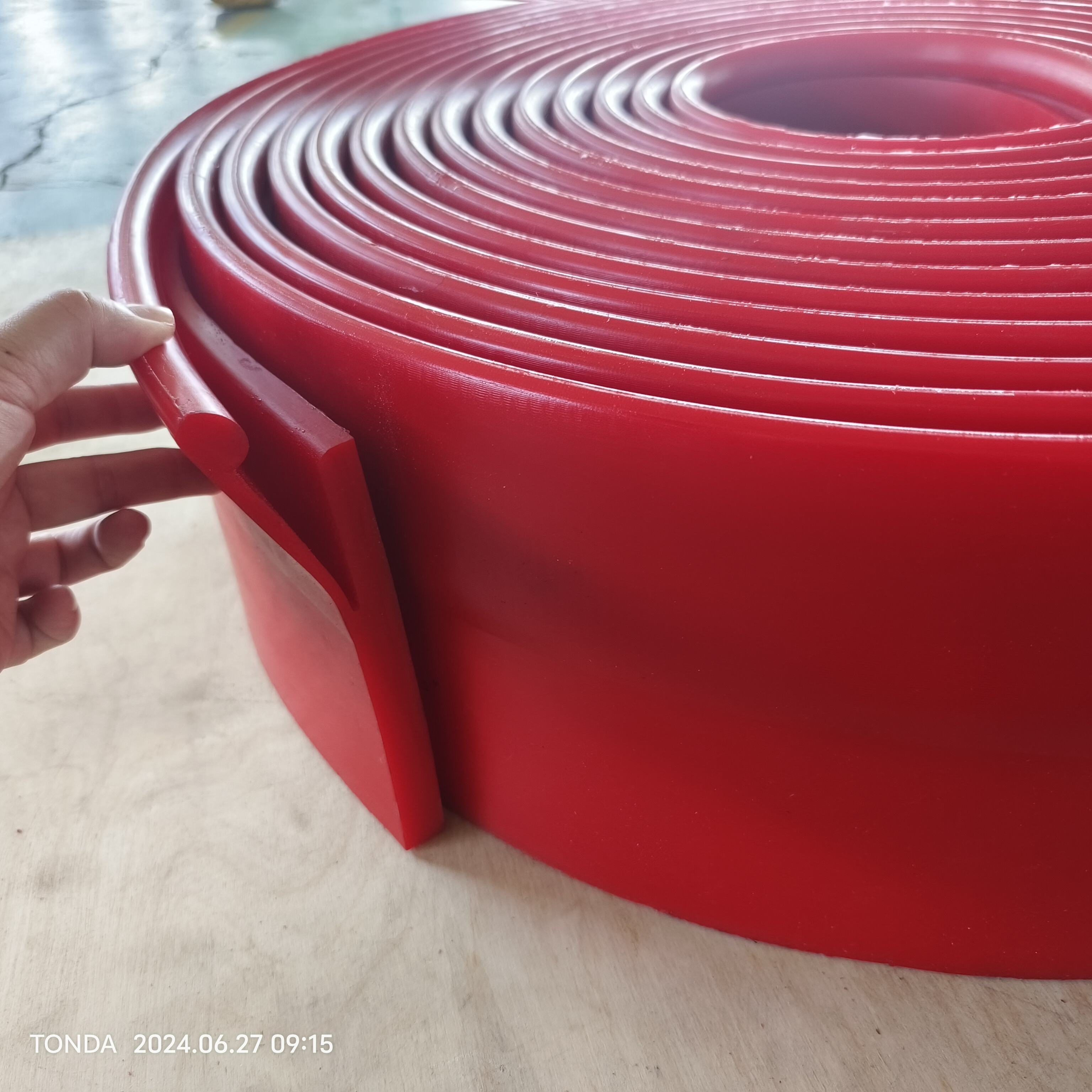
Why Urethane Conveyor Skirtboard Sealing Delivers Superior Leak-Free Performance
Urethane conveyor skirtboard sealing provides unmatched leak containment through its unique material properties and proven performance. Unlike traditional alternatives, urethane maintains dynamic integrity across demanding operating conditions while delivering measurable reductions in fugitive materials.
Elastic Resilience and Abrasion Resistance: How Urethane Maintains Dynamic Seal Integrity Under Belt Flex, Load Shifts, and Vibration
The elastic properties of urethane let it soak up all sorts of operational stress that would break rigid materials apart. Compared to rubber, urethane can stretch back to its original shape after being stretched 28% more. This makes it really good at dealing with those annoying belt movements and vibrations caused by heavy loads without getting permanently deformed. No more gaps forming when things flex around, so there's always good contact pressure maintained. And speaking of durability, the polymer structure of urethane stands up to abrasive stuff pretty well too. Tests show it can handle over 14,000 Taber abrasion cycles before showing signs of wear. That's actually three times better than rubber which only lasts about 4,500 cycles. When seals need to work with sharp rocks or heavy mineral loads, this combination of flexibility and toughness keeps them looking good and functioning properly for longer periods. The result? Fewer tiny gaps develop over time that eventually lead to leaks getting worse and worse.
Containment Efficiency Validated: 92–97% Fugitive Material Reduction vs. Rubber Skirting (EPA-Aligned Dust Studies, 2023)
The numbers back up what many industry experts already know about urethane seals being better at keeping things contained. Recent tests conducted according to EPA standards showed something pretty impressive happening in 2023. When companies switched over to urethane conveyor skirtboards for sealing, they saw anywhere between 92% to almost 97% less dust escaping into their facilities. This works because urethane maintains constant contact along edges while bouncing back when compressed, which stops that annoying bounce effect that makes particles fly out from under rubber seals. Look at what happened in beverage packaging plants specifically. After installing these new urethane systems, those facilities lost 18 metric tons less material each year and spent 77% fewer dollars cleaning up spills. There's another benefit too. The friction created during operation actually drops enough to lower temperatures around seal points by about 52 degrees Fahrenheit. This matters a lot when equipment runs fast (over 3.5 meters per second) since it means less dust gets generated overall, helping companies stay within OSHA's safety limits for airborne particles.
Precision Design Principles for Zero-Edge-Leakage Urethane Skirtboard Sealing
Optimal skirt angle, contact pressure distribution, and ±0.8 mm belt clearance tolerance
Getting those urethane conveyor skirtboards to stay leak free really comes down to controlling three main factors in the engineering process. The best angles for skirts usually fall between 30 and 45 degrees, which helps guide materials towards the middle of the belt and keeps things cleaning themselves as they go along. Pressure distribution is another big deal point. If there are spots where pressure builds up too much along the seal, that just speeds up wear and tear on the equipment. Probably the most important factor though is keeping that belt clearance within about plus or minus 0.8 mm. This small window allows for normal expansion when temperatures change and accounts for how belts naturally move around during operation. Without this tight control, gaps can form larger than 1.5 mm letting fine particles escape. Fortunately, laser alignment technology has made it possible to monitor these clearances in real time nowadays, so operators can make necessary adjustments long before any actual leakage happens.
Performance comparison: urethane vs. rubber in high-moisture, abrasive, and >3.5 m/s conveyor applications
When it comes to handling tough operating conditions, urethane just beats rubber hands down. Take those wet environments where moisture is everywhere. Rubber tends to soak up water and swell about 15%, which ruins seals over time. But urethane? Almost no water gets absorbed at all. That makes all the difference in sealing effectiveness. And when dealing with rough stuff like iron ore, urethane can take a pounding much better than rubber. We've seen it last around eight times longer between replacements in these harsh applications. Speed matters too. At anything above 3.5 meters per second, urethane keeps dust contained between 92% and 97% of the time. Rubber starts falling apart pretty quickly under similar conditions. The main reasons people switch to urethane are these kinds of real world benefits.
- Friction management: Static coefficient ¼ = 0.35 reduces drag-induced gaps
- Thermal stability: Operates reliably from –40°C to 90°C without hardening or cracking
-
Dynamic recovery: Absorbs belt vibration while preserving continuous seal contact
These properties translate to 30% longer service intervals and verifiable spill reduction.
Installation Protocols That Guarantee Long-Term Urethane Conveyor Skirtboard Sealing Integrity
Laser-guided alignment, sequential torque sequencing, and post-installation tension calibration
Getting the installation right starts with aligning everything using lasers so those skirtboard gaps stay below 0.8 mm at all times. That's not just recommended it's essential if we want to stop leaks when things are running fast. The next step involves tightening bolts in a specific order to make sure pressure spreads evenly across all the mounting spots. Most shops use special tension tools to get about 3 to 5 percent stretch out of those urethane seals during installation. After everything goes together, techs run checks with digital gauges to confirm there's between 15 and 20 psi of pressure touching the entire length of the belt. We always wait at least a day or two before putting any real load on the system because the materials need time to bond properly at a molecular level. Plants that follow this whole process tend to replace seals roughly 63% less often than others, plus they keep their dust control systems compliant with EPA standards for well over 18 thousand hours of operation.
Proactive Maintenance Strategies to Sustain Leak-Free Operation and Dust Emission Control
Infrared thermography wear mapping and contact-force decay monitoring (trigger: >15% force loss)
Using infrared thermography for wear mapping helps spot those uneven erosion spots on urethane skirtboard seals long before any actual leaks start happening. At the same time, contact force sensors keep an eye on how the pressure drops between the seal itself and the moving belt surface. Once the force starts dropping below what's considered normal these days around 15%, which has been proven through years of work in bulk material handling operations, maintenance crews get their automatic warning signals. Combining both technologies stops those pesky fugitive emissions because technicians can make adjustments or replace parts right when needed instead of waiting for disaster. Companies that switch from just following maintenance calendars see about a two thirds reduction in unexpected downtime during abrasive processes. Keeping things monitored continuously means no surprises with leaks and proper dust control stays within regulations all through the life of those seals.
FAQs about Urethane Conveyor Skirtboard Sealing
What makes urethane seals more effective than rubber?
Urethane offers superior abrasion resistance and elastic resilience, allowing it to maintain seal integrity under dynamic conditions like belt flex and vibration, unlike rubber which deforms easily.
How does urethane contribute to dust reduction?
Urethane's ability to maintain constant contact and reduce bounce back helps in containing dust, achieving up to 97% reduction compared to rubber skirting.
What are the installation protocols for urethane skirtboards?
Proper installation involves laser-guided alignment, strategic torque sequencing, and post-installation tension calibration, ensuring seal integrity and minimizing leak potentials.
How can maintenance affect the performance of urethane conveyors?
Proactive maintenance using infrared thermography and contact-force monitoring can prevent leaks and ensure dust control remains within regulatory standards, reducing unexpected downtime.
Table of Contents
- Why Urethane Conveyor Skirtboard Sealing Delivers Superior Leak-Free Performance
- Precision Design Principles for Zero-Edge-Leakage Urethane Skirtboard Sealing
- Installation Protocols That Guarantee Long-Term Urethane Conveyor Skirtboard Sealing Integrity
- Proactive Maintenance Strategies to Sustain Leak-Free Operation and Dust Emission Control
- FAQs about Urethane Conveyor Skirtboard Sealing