 EN
EN
The Evolution and Advantages of PU Screen Mesh Technology
From Woven Wire to Polyurethane Screen Mesh: A Technological Leap
Screening operations started moving away from steel woven meshes toward PU screen mesh once they realized how limited traditional materials really were. The old woven wire screens just wore out too fast - losing about 30% efficiency after only two months when dealing with abrasive materials. And let's not forget the constant clogging issues that cost mines around $740k each year in lost production time according to some research from Ponemon back in 2023. Polyurethane on the other hand has this great molecular flexibility that makes it last anywhere from 4 to 6 times longer than steel alternatives. What's even better is that these PU screens keep classifying materials accurately at over 92% efficiency throughout their extended lifespan, something confirmed by tests published in the Mining Technology Report for 2022.
Key Drivers Behind the Adoption of PU Screen Mesh
Three primary factors accelerated the shift toward PU screen mesh:
- Durability: Advanced abrasion-resistant formulations extend operational life to 12–18 months in coal washing plants, far exceeding the 3–4 month lifespan of rubber screens.
- Cost efficiency: Despite a 20–35% higher initial investment, PU screens reduce replacement frequency by 67%, significantly lowering lifecycle costs (2023 Mineral Processing Journal).
- Adaptability: Hydrolysis-resistant grades withstand pH levels from 2 to 13, making them suitable for acid leaching and alkaline ore processing.
How Wear-Resistance Redefines Screening Media Longevity
The elastomeric nature of PU materials allows them to absorb around 40 percent more impact energy compared to steel while also standing up better against particles getting embedded. A recent wear analysis conducted in 2024 showed something interesting too. PU apertures kept their shape pretty well over time, maintaining about plus or minus 0.1 mm stability even after running for 5,000 hours straight. That's actually five times better performance than what we see with rubber alternatives. When it comes down to real world applications, especially those involving fine meshes below 325 mesh size, this kind of precision makes a noticeable difference. The reduction in oversized particles passing through is roughly 19%, which means cleaner products coming off production lines across various industries.
| Material | Average Lifespan (Months) | Cost Per Ton Processed |
|---|---|---|
| Steel Woven Mesh | 1.5-2.5 | $4.20 |
| Rubber Screens | 3-4 | $3.75 |
| PU Screen Mesh | 12-18 | $2.10 |
Data source: 2023 Global Screening Materials Benchmark (n=127 mining sites)
Unmatched Durability and Long-Term Cost Efficiency of PU Screen Mesh
Durability and Longevity of PU Screens: Data from Field Trials
Tests in the field show PU screen mesh can last anywhere from three to five times longer than what we typically see with standard materials. Take for instance a copper mine operation down in South Africa where these PU screens ran nonstop for more than fourteen months straight. That means no more replacing them every two weeks like they had to do with those old woven wire meshes according to Mining Technology Review back in 2025. The people running the equipment noticed something pretty significant too: around sixty to seventy-five percent less downtime when things break down unexpectedly, plus lower maintenance expenses overall. Why? Because PU just handles wear and tear better, keeping its shape and strength even after repeated stress cycles.
Abrasion Resistance in Screening Materials: Outperforming Steel and Rubber
Testing shows that polyurethane screen mesh stands up to abrasion about three times better than high carbon steel, and lasts over four times longer than rubber before wearing out. The special mix of polymers gives it a hardness range between 85 and 92 on the Shore A scale, yet still keeps enough flexibility to handle those jagged aggregate materials without breaking down. When put through granite screening operations, PU only loses around 0.08 grams per cubic centimeter, whereas steel loses roughly 0.25 g/cm³ under similar conditions according to research published in Materials Performance Journal last year.
Corrosion-Free Screening Solutions for Harsh Environments
Polyurethane screen mesh doesn't corrode like metal alloys do, so it avoids all those problems that plague traditional materials. We're talking about things like apertures getting deformed by rust, screens breaking down when exposed to acidic slurries, and that annoying electrostatic buildup during dry screening operations. After just six months of service, PU remains completely free from corrosion while steel typically shows signs of wear at around 15 to 30 percent. That makes polyurethane particularly well suited for harsh environments such as saltwater dredging operations or mineral processing facilities where the water tends to have a pH level below 4.0. These conditions would quickly eat away at conventional metal screens but pose no real threat to PU mesh.
High Initial Cost vs. Long-Term Savings: The Economic Case for PU Screen Mesh
| Cost Factor | PU Screen Mesh | Steel Mesh | Rubber Mesh |
|---|---|---|---|
| Average Lifespan | 12-18 months | 3-4 months | 5-6 months |
| Replacement Labor/Year | 0.5 days | 6 days | 4 days |
| Total 5-Year Cost* | $18,200 | $41,500 | $32,800 |
*Per 100 ft² of screening area, including material, labor, and downtime (2025 Mining Economics Report)
PU offers a 59% cost advantage over steel and 44% over rubber due to extended lifespan, reduced maintenance, and consistent throughput–factors driving adoption in 78% of new mineral processing facilities (Global Screening Trends 2025).
Optimized Screening Performance Through Precision Design
Material Classification Efficiency in Mining Industry Applications
PU screen mesh actually boosts how well materials separate because it maintains consistent openings and responds better to vibrations when running. Real world testing indicates around 20% better sorting performance compared to traditional wire mesh screens. This happens mainly because fewer particles end up in the wrong place after screening. What makes PU special is that it bends just enough to handle all sorts of oddly shaped aggregates without breaking down. Plus those anti-rebound features stop tiny particles from jumping back onto the screen surface during operation, which keeps things moving smoothly through the process.
High Open Area Urethane Screens: Maximizing Throughput
Modern polyurethane screens benefit from advanced dual layer molding methods which give them about 25 to 40 percent more open area compared to their steel counterparts. The real world impact is pretty significant when looking at actual throughput numbers. Take for instance a standard 6 foot by 16 foot PU panel processing around 380 to 425 tons per hour of three quarter inch granite aggregate. That beats what most steel reinforced rubber screens can manage, typically handling between 290 and 320 TPH. What makes this possible? Cross rib reinforcement plays a big role here, keeping those apertures stable even when faced with extreme conditions. We're talking loads well over 1500 pounds per square foot without compromising performance.
Fine Mesh Screening (Down To 325 Mesh) With Precision Engineering
| Mesh Size | Steel Screen Blinding Rate | PU Screen Blinding Rate |
|---|---|---|
| 100 | 28% | 9% |
| 200 | 47% | 14% |
| 325 | 63% | 21% |
Precision-cast PU apertures maintain ±0.002’ tolerance across full panel widths, enabling reliable separation of particles as small as 45–75µm–essential for industrial mineral recovery. Tapered aperture walls minimize near-size particle jamming during high-frequency screening cycles.
Anti-Blinding Properties in Screen Panels: Sustaining Performance
Hydrophobic PU surfaces reduce moisture-related adhesion by 67% compared to rubber in wet screening applications. Dynamic stress distribution across the tensioned panel generates micro-vibrations that dislodge trapped particles, preserving over 95% open area for 8,000–10,000 operational hours in demanding environments like coal washing plants.
Versatility and Customization of PU Screen Mesh Across Applications
Wet and Dry Screening Applications: Adapting to Diverse Conditions
Polyurethane screen mesh works well for both slurry based mineral processing and dry aggregate sorting applications. Steel tends to rust when exposed to moisture, and rubber gets brittle in hot dry conditions, but PU stays pretty much the same no matter what environment it's in. The way PU repels water means materials don't stick to it during wet operations, yet it still keeps its flexibility when things get dry. This makes PU screens especially good for food grade mineral separation work and coal prep plants where keeping contaminants out and maintaining consistent particle sizes matters a lot for quality control.
Modular Design and Easy Integration into Existing Equipment
Most manufacturers these days are creating PU panels equipped with those handy universal tensioning systems that fit right into old vibrating screens and trommel setups. What really matters for plant managers is how much faster these panels go in place. We're talking about cutting installation time down by around 40% when compared to traditional welded steel options, plus there's absolutely zero messing around with frames needed. The standardized bolt holes and those clever interlocking edges mean operators can mix and match PU sections with different materials wherever specific wear problems pop up in the system. This flexibility makes maintenance teams' lives a lot easier during routine upgrades or emergency repairs.
Customization of Screen Mesh for Unique Operational Needs
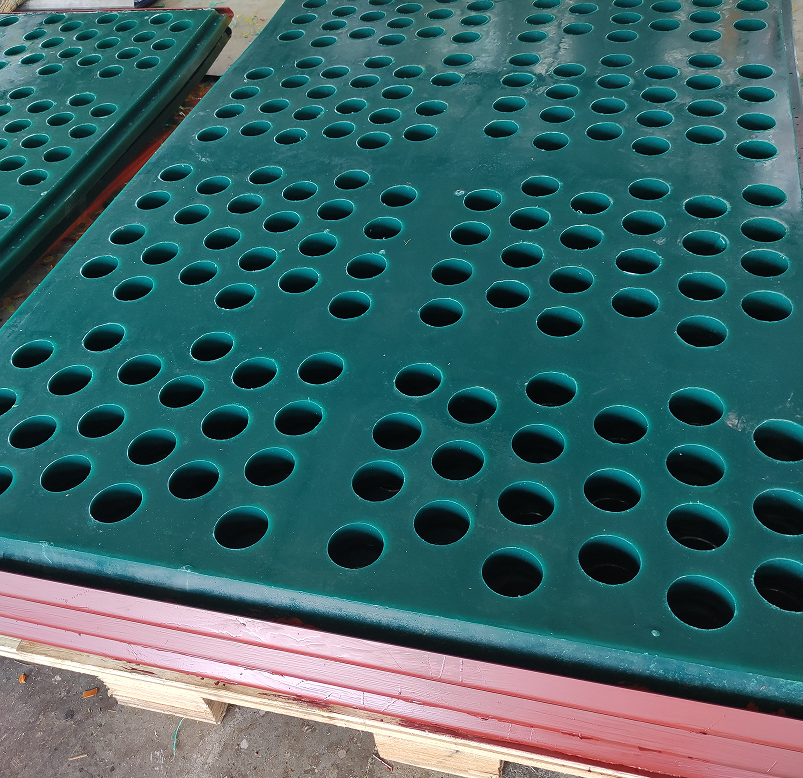
The moldable nature of polyurethane gives engineers plenty of flexibility when designing screening systems. They can adjust things like aperture shapes – square, slotted, even hexagonal designs work well – along with material hardness ranging from 55 to 95 Shore A and thickness options between 10 and 50 millimeters depending on what kind of material needs sorting and how long it will last under pressure. Take one real world case study: at a phosphate mining operation somewhere in Florida, operators saw their recovery rates jump around 12 percentage points after switching to specially designed 2.8mm teardrop shaped openings that just wouldn't get blocked by sticky clay particles. When talking about open area ratios, there's quite a range available too. For tough jobs where big rocks need breaking down, going with around 15% coverage makes sense while finer applications like separating silica sand might call for something closer to 45%. Finding that sweet spot between how long parts last versus how much material gets processed per hour is really important for day to day operations.
Real-World Impact: Case Studies and ROI of High-Performance PU Screen Mesh
Case Study: Tailored Polyurethane Screen Mesh in a Copper Mine
A leading copper mine replaced steel screens with custom-engineered PU mesh, achieving a 40% increase in throughput and a 67% reduction in unplanned downtime (2023 field trial data). The PU screens maintained consistent grading accuracy in high-moisture conditions, and their corrosion resistance prevented premature failures common in acidic environments.
Cost Savings and Reduced Maintenance in Continuous Operations
PU screen mesh delivers savings through three key pathways:
- Reduced replacement frequency: Lasts 3–5 times longer than rubber in abrasive coal processing
- Lower energy consumption: Weighs 15% less than steel, reducing vibration motor load
- Minimal maintenance: Requires no lubrication, unlike metal screens
Cement plant operators report over 300 hours of continuous operation between cleaning cycles–double the performance of previous media.
Wear Life Improvement in Screening Materials: ROI Analysis
Although PU screen mesh has a 2.2x higher upfront cost than standard steel screens, its total cost of ownership becomes favorable within 8–14 months. A 2024 ROI study across 17 mining operations revealed:
| Metric | PU Screen Mesh | Steel Screens |
|---|---|---|
| Average replacement cycle | 18 months | 6 months |
| Annual downtime costs | $18k | $74k |
| Labor/maintenance hours | 120 | 410 |
Extended service life and sustained screening precision enable payback periods under two years, with ongoing annual cost reductions of 23–35% thereafter.
FAQ Section
What is PU screen mesh?
PU (polyurethane) screen mesh is a type of screening media made from polyurethane, known for its durability, flexibility, and efficiency in various screening operations.
Why is PU screen mesh favored over traditional materials?
PU screen mesh lasts 4-6 times longer than steel, better resists abrasion and wear, and maintains over 92% classification efficiency throughout its lifecycle, while also being non-corrosive.
What are the cost benefits of using PU screen mesh?
Despite a higher initial cost, PU screen mesh reduces replacement frequency by 67%, cuts downtime by 60-75%, and offers a 59% cost advantage over steel over a standard operational period.
In which environments is PU screen mesh particularly effective?
PU screen mesh is effective in harsh environments like saltwater dredging, acid or alkaline processing, slurry-based mineral processing, and dry aggregate sorting applications.
Table of Contents
- The Evolution and Advantages of PU Screen Mesh Technology
- Unmatched Durability and Long-Term Cost Efficiency of PU Screen Mesh
- Optimized Screening Performance Through Precision Design
- Versatility and Customization of PU Screen Mesh Across Applications
- Real-World Impact: Case Studies and ROI of High-Performance PU Screen Mesh
- FAQ Section