
 EN
EN
How Viscoelastic Damping in Polyurethane Relaxation Screens Reduces Particle Breakage
The science of viscoelastic energy absorption during impact and vibration
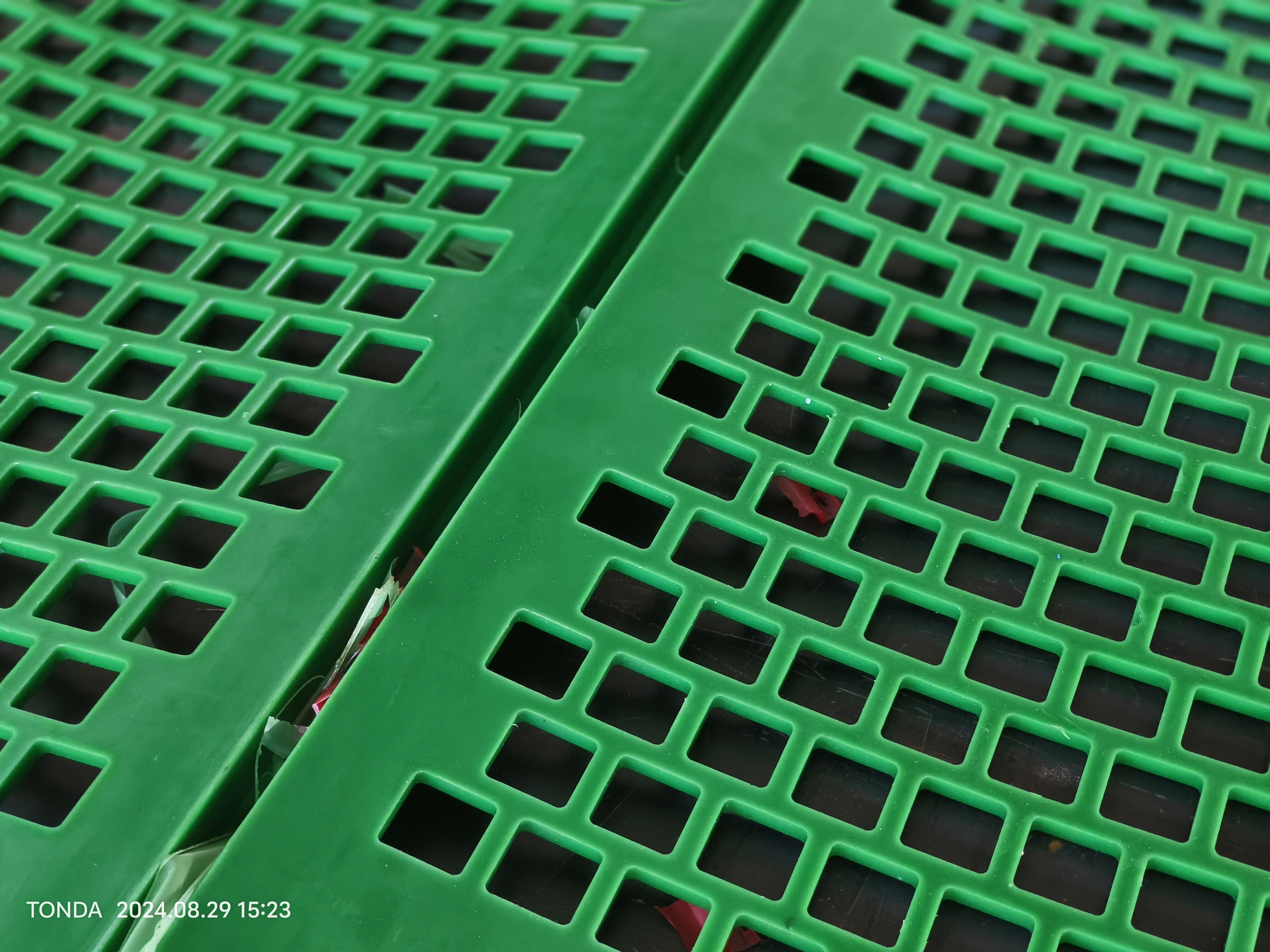
Polyurethane relaxation screens work like sophisticated energy sponges thanks to their unique makeup that combines both solid elasticity and liquid-like stickiness. When something hits these screens, the long polymer molecules inside actually move around during the impact, soaking up most of the energy. About two thirds of those vibrations get turned into heat through friction within the material itself. What's left spreads out slowly throughout the interconnected network, so no single spot takes all the punishment at once. Compared to regular rigid screens, polyurethane takes longer to bounce back after being hit. This means impacts last longer - think milliseconds instead of microseconds - which cuts down peak stresses by roughly half. The result? Materials don't just break apart under pressure but compress in a controlled way instead. Keeping structures intact over many screening cycles matters a lot, particularly when working temperatures match what the material needs to perform consistently without losing its shock absorbing properties.
Comparative breakage reduction: polyurethane vs. steel/mesh screens (62% granule integrity improvement)
When it comes to screening processes, steel screens send about 89% of their impact energy right back at the material being processed. This creates fractures along the crystal boundaries, especially noticeable in brittle substances. On the other hand, polyurethane relaxation screens actually help maintain granule integrity at around 62%. The reason? These screens spread out the force over a longer period, which means less concentrated stress on any single point. That's really important when dealing with delicate mineral structures or pharmaceutical compounds where maintaining crystal integrity matters. Take quartz abrasives for instance - polyurethane keeps particle sizes consistent at 97%, while traditional woven wire mesh only manages 78%. And with friable coal, there's roughly three times less microfracturing compared to conventional methods. From an operational standpoint, this mechanical difference translates into real savings. Companies report significantly lower reprocessing costs and better overall yields from their production runs.
Stress Redistribution and Fracture Resistance Enabled by Polyurethane Relaxation Screen Architecture
Dynamic stress dispersion across the screen surface and backing support
When it comes to polyurethane relaxation screens, they work by spreading out impact forces in all directions across their special viscoelastic material instead of letting stress build up at specific spots where things touch. What happens is the molecular chains stretch out and soak up the energy from impacts. Any leftover force gets passed along pretty well to the strong backing support behind them. This setup stops those annoying pressure hotspots that can start tiny cracks forming over time. Tests done in actual field conditions show something interesting too. Screens made with Shore A hardness ratings around 70 to 90 actually cut down on stress concentration by about 40 percent when compared to stiffer options available on the market today. Plus there's this open cell design that lets forces move around in multiple directions, which makes these materials much better at resisting cracks even when subjected to intense vibrations for long periods.
Enhanced mechanical toughness from crosslinked polyurethane networks
Polyurethane networks that are chemically crosslinked show remarkable resistance to fractures, boasting tear strengths of at least 80 kN/m and elongation at break exceeding 500%. The covalent bonds between chains form special pathways for energy dissipation. When stress builds up, it gets redirected to these sacrificial bonds. There's also this cool recovery feature where the material bounces back after being deformed, plus hysteresis damping that turns impact energy into heat. By controlling how varied the polymer chain lengths are, manufacturers can reduce weak spots while still keeping the material flexible enough for most applications. These crosslinked structures last about double the number of deformation cycles compared to regular linear polymers. This durability directly translates to real world benefits like the observed 62% better retention of granule integrity when subjected to abrasive screening processes.
Optimizing Polyurethane Relaxation Screen Configuration for Breakage-Sensitive Operations
Critical parameters: Shore A hardness, open area ratio, and profile geometry
Getting the right setup means finding a sweet spot between protecting particles, maintaining equipment longevity, and keeping things moving efficiently. The Shore A hardness scale plays a big role in how much shock gets absorbed. Softer materials around 55A to 70A work best when handling delicate stuff, giving that extra cushion. But if wear resistance is more important, going up to 70A through 90A makes sense despite less give. When it comes to open area ratios, most setups fall somewhere between 30% and 40%. This range helps maintain good flow without clogging issues becoming a problem. The shape of the profile matters too. Curved or trapezoid shaped openings tend to spread out stress better than sharp corners do. Tests show these shapes can cut down on break points by about 20% which is pretty significant. For applications where breakage really matters, like with pharmaceutical powders or easily crushed minerals, combining medium hardness at around 65A with those trapezoidal openings works wonders. This combination helps redirect the force away from sensitive particles, so their crystal structure stays intact even during sorting processes.
FAQ
What is viscoelastic damping?
Viscoelastic damping is a property of certain materials, like polyurethane, where they absorb energy from impacts and vibrations, converting it into heat. This helps reduce stress and potential breakage of materials.
How do polyurethane relaxation screens reduce particle breakage?
Polyurethane relaxation screens absorb impact energy and distribute stress evenly across their structure, reducing peak stresses that can cause particle breakage, and maintaining granule integrity by about 62% compared to traditional screens.
Why are polyurethane screens preferred over steel or mesh screens?
Polyurethane screens significantly reduce particle breakage by spreading out impact forces over time and preventing concentrated stress points, unlike steel or mesh screens which can cause microfractures.
What are critical parameters in optimizing polyurethane screen configurations?
Key parameters include Shore A hardness, open area ratio, and profile geometry. These influence shock absorption, stress distribution, and flow efficiency, important for maintaining particle integrity.