 EN
EN
What Defines Seal Integrity in Urethane Conveyor Skirtboard Sealing?
The three pillars: consistent contact pressure, zero material entrapment, and dynamic belt interface stability
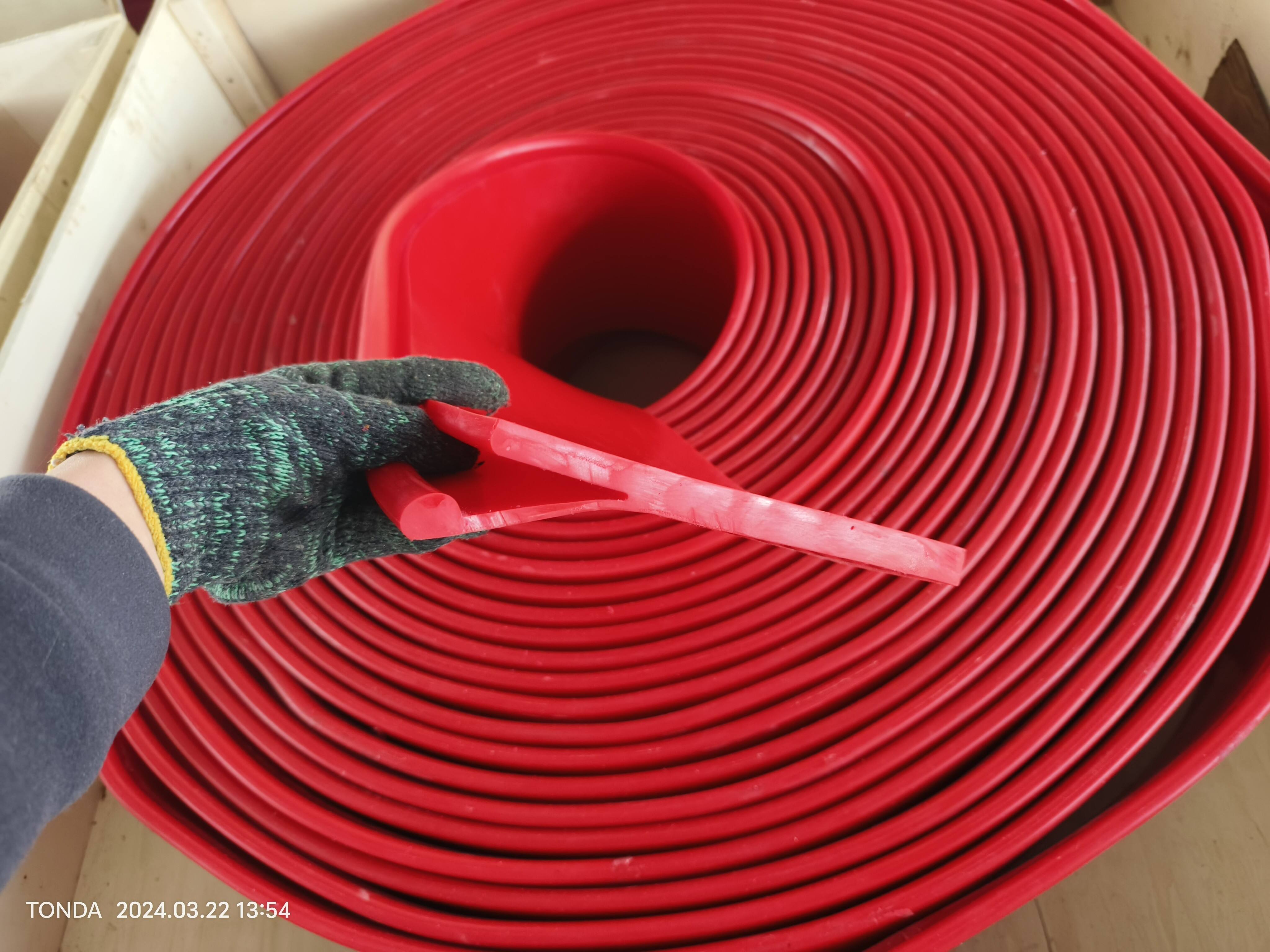
Getting good seal integrity with urethane conveyor skirtboards comes down to three main things working together. The first is making sure there's even pressure across the seal surface. We usually aim for around 15 to 20 psi here because this stops dust from getting through while also reducing the friction that wears out the seals faster. Next up are those tiny clearance gaps between parts. When we keep them below about 1 millimeter, it prevents small particles from getting stuck in there. And trust me, when fine materials get trapped, they tear at the urethane lips and cause most early failures. Finally, the system needs to handle belt movement and vibrations without losing grip. Polyurethane has this great property where it bounces back after being compressed, recovering over 90% of its original shape even after repeated stress cycles. Put all these factors together and what do we get? Dust emissions drop somewhere between 60% and 75%, and these seals last roughly two or three times longer compared to regular rubber options in bulk material handling applications.
Why urethane's mechanical properties—tensile strength, elongation, and rebound—directly govern seal longevity (ASTM D412/D2240 benchmarks)
The unique structure of urethane gives it better results for skirt sealing compared to regular rubber materials. When it comes to strength, urethane meets ASTM D412 standards with tensile strength above 4000 psi, so it can handle impacts from larger materials without getting deformed. For flexibility, it scores between 400 and 600% on the ASTM D2240 test, meaning it bends easily with changes in belt trough shapes without developing cracks. What really stands out though is its ability to bounce back after compression. According to ASTM D2632 tests, urethane has over 40% rebound resilience. This matters because materials below 35% tend to wear down twice as fast at those high speed transfer points where belts vibrate constantly. All these characteristics work together in practice. The greater elasticity maintains consistent pressure against surfaces, which helps keep dust and debris out and reduces the kind of wear caused by abrasion over time.
Operational & Mechanical Factors That Compromise Urethane Skirtboard Seal Integrity
Belt Sag, Misalignment, and Troughing Angle: How They Distort Contact Pressure and Accelerate Localized Wear
When belts sag, they mess up how pressure spreads across the urethane seal, pushing most of the force toward the edges instead of keeping good contact along the middle. What happens next? Well, this imbalance can really speed up wear in those heavy load areas, sometimes tripling it compared to normal conditions. Then there's misalignment which makes things worse by pulling the urethane lip sideways, causing uneven wear patterns that maintenance crews often see during inspections. The same goes for when troughing angles go past about 35 degrees. At those angles, gaps form along the belt edges letting material escape. Every extra 5 degree angle adds around 18 percent more dust getting loose from the system and also wears down those edge areas faster. All these problems together lead to equipment failure because pressure isn't distributed evenly anymore, leaks start forming, and the polymer materials break down quicker at the spots where stress builds up over time.
Pinch Point Formation and Fines Entrapment: Leading Causes of Urethane Lip Tearing and Premature Seal Failure
Material tends to get stuck between conveyor belts and skirtboards, creating pinch points where it jams against the urethane lip while the system runs. When this happens, the shear forces created are usually stronger than what the polymer can handle, which typically ranges from around 1,500 to 4,000 psi. This leads to tiny tears forming in the material. Fine particles embedded in the mix, particularly tough ones like silica or iron ore, work their way into the surface over time. With each belt movement, these particles scratch away at the lip, gradually causing more damage until eventually the entire lip fails completely. Once there's even a small gap due to normal wear and tear, more material gets trapped inside, making the problem worse over time. If left alone, this whole process of entrapment and abrasion can significantly shorten the life of seals, sometimes cutting them down by as much as two thirds compared to properly maintained equipment. To prevent all this trouble, manufacturers have developed several approaches. Some use specially shaped skirtboards that guide material away instead of letting it build up. Others create urethane materials with higher rebound properties (over 50% generally) specifically designed to keep those pesky particles from getting embedded in the first place.
Urethane's Real-World Resilience in Demanding Bulk Handling Environments
Abrasion resistance in high-velocity coal and abrasive aggregate transfer zones
When it comes to conveyor systems dealing with harsh materials like coal and aggregates, urethane skirtboards beat regular rubber options by about three to five times in terms of wear resistance. The special polymer construction stands up to tiny tears even when stuff hits them pretty hard, around 15 meters per second or so. For facilities handling silica-rich materials, we typically see urethane components showing less than 2 millimeters of wear after running nonstop for roughly 10,000 hours. That's night and day compared to rubber parts which tend to break down much faster under similar conditions. This kind of toughness comes from just the right balance of hardness levels between 80 and 95 on the Shore A scale plus impressive tensile strength numbers exceeding 5,000 pounds per square inch according to ASTM standards. As a result, operations report seeing somewhere around 40 percent reduction in material spillage at busy loading docks where volume matters most.
Chemical and thermal stability: performance limits across pH, moisture, and ambient temperature ranges
Urethane works well with alkaline coal dust that typically ranges from pH 8 to 10, and can handle occasional moisture without swelling up like some other materials do. But watch out for long term contact with really acidic slurries below pH 3 or those hydrocarbon oils - these tend to eat away at the seals over time, cutting their effectiveness by around 15 to 20 percent each year. Temperature wise, urethane stays pretty stable between minus 40 degrees Celsius and 80 degrees Celsius. Push past those temperature extremes though, and the material starts to harden faster than normal. Cement plant operators have seen urethane skirts hold up for about 18 to 24 months even through harsh freeze-thaw cycles. That's actually more than twice as long as what we usually see with rubber components, which typically need replacing every 6 to 9 months under similar conditions.
Optimizing Skirtboard Sealing Systems for Maximum Urethane Performance
Canoe liners and wear liners: functional synergy with urethane skirts to reduce fugitive dust by 60–75% (case evidence)
Getting the most out of urethane conveyor skirtboard sealing means working these parts together with other components like canoe liners and wear liners. These tough pieces take the brunt of the material hitting them head on, so the urethane skirt can just worry about keeping good contact with the moving belt. What we're seeing is a system where layers work together to stop fine particles from escaping, spread out the stress points away from where the seal meets the belt, and keep those liners from bending out of shape which messes with how tight the seal stays. Take one big port operation for instance they cut down airborne dust by around 60 to 75 percent after implementing this setup. When impact forces get transferred to those replaceable liners instead, the urethane seals stay in their proper shape much longer. We've seen service life double or even quadruple in coal transfer operations handling massive volumes. All this means the natural toughness and bounce back ability of urethane actually translates into real world results for controlling dust without messing up how the belt tracks along its path.
FAQ
What are the main benefits of urethane over rubber in skirtboard sealing?
Urethane is more resilient in harsh environments, has higher tensile strength, and better abrasion resistance, leading to a longer lifespan than rubber in skirtboard sealing.
How does urethane handle temperature fluctuations?
Urethane is stable between -40°C and 80°C, making it effective in varying temperatures, although extreme conditions can affect its durability.
What are common operational issues affecting urethane skirtboard integrity?
Common issues include belt sag, misalignment, and wrong troughing angles, which can lead to uneven pressure distribution and accelerated wear.
Table of Contents
- What Defines Seal Integrity in Urethane Conveyor Skirtboard Sealing?
- Operational & Mechanical Factors That Compromise Urethane Skirtboard Seal Integrity
- Urethane's Real-World Resilience in Demanding Bulk Handling Environments
- Optimizing Skirtboard Sealing Systems for Maximum Urethane Performance
- FAQ